
Bodrum Castle Visitor Guide: History, Museum & Tips
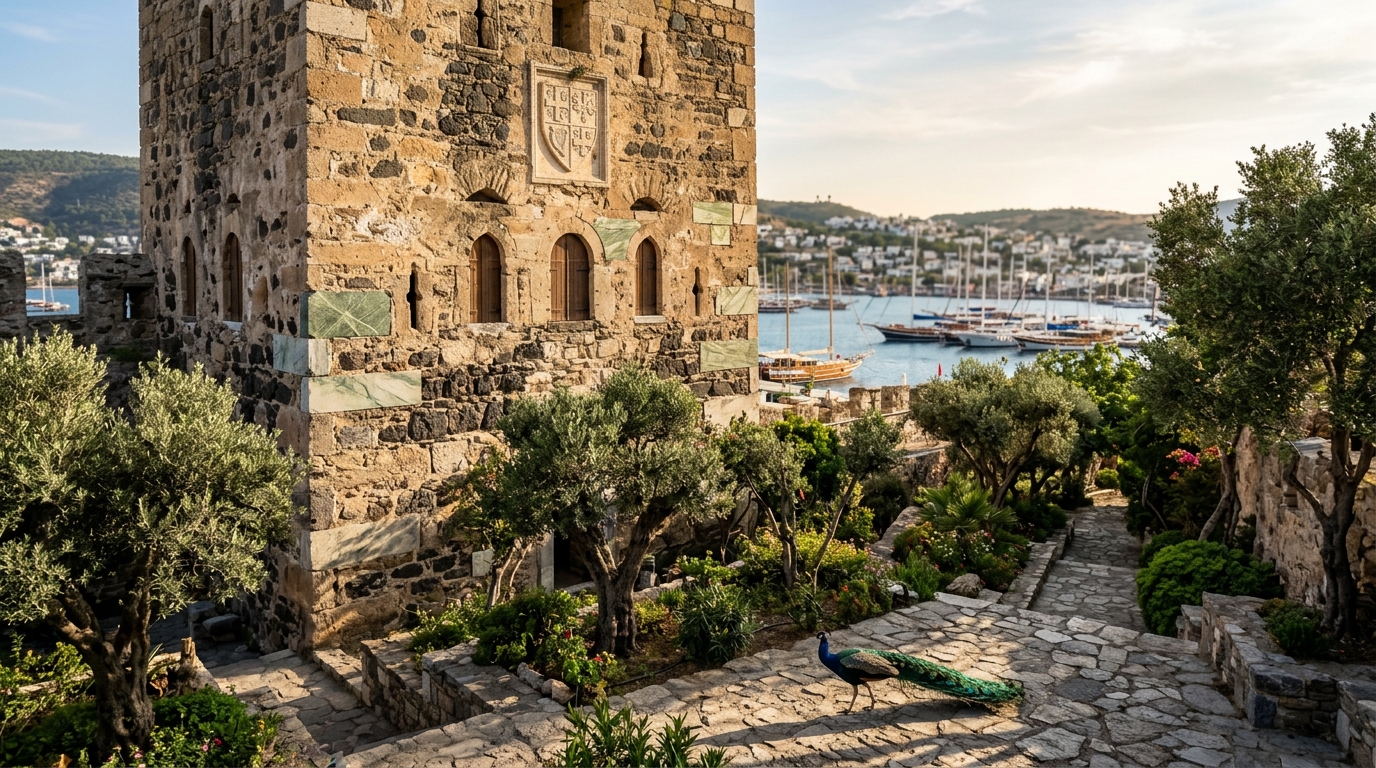
Bodrum Castle, built from stones of the ancient Mausoleum of Halicarnassus, is the Aegean coast's most layered monument — part Crusader fortress, part underwater archaeology museum. Here's what to see inside and how to plan your visit.
If you stand on the marina promenade in Bodrum town and look toward the harbor mouth, you'll see it immediately: a broad, sand-colored fortress rising from the rocks, its towers catching the last light before sunset. This is Bodrum Castle, known locally as Bodrum Kalesi and historically as the Castle of St. Peter, and it is as close as this stretch of coast comes to a single defining monument. Almost everyone who visits the peninsula ends up here at some point, and for good reason — few sites anywhere on the Aegean pack this much layered history, architecture, and marine archaeology into one walkable space.
A Fortress Built From a Wonder of the Ancient World
The castle's story begins in the early fifteenth century, when the Knights Hospitaller — the same crusading order that built the Palace of the Grand Master in Rhodes — needed a stronghold on the Anatolian mainland. The Knights began construction at Bodrum in 1402, after the Ottoman advance had made their position in the eastern Mediterranean increasingly precarious, creating one of the last great Crusader fortifications in Asia Minor. They called it Petronium, a name that eventually softened into "Bodrum."
What makes the building itself so remarkable is what it's made of. The Knights quarried the nearby Mausoleum of Halicarnassus, one of the Seven Wonders of the Ancient World and already partially ruined by earthquake, for building stone, so that green marble slabs from the Mausoleum are still visible in the castle walls today, along with a carved frieze of lions and warriors clearly recycled from the ancient monument. Walking the ramparts, you're essentially touring a wonder of the ancient world in its second life.
Because the Hospitallers were a multinational brotherhood, the castle was built in sections funded by different national contingents. Five towers, each built by a different European nation — England, France, Germany, Italy, and Spain — of the Knights Hospitaller still stand at the fortress's high points, and each retains its own character, with carved coats of arms and inscriptions marking which group built which section.
The Knights didn't hold the castle forever. The castle was handed over to the Ottomans in 1523 as terms of the Knights' surrender in Rhodes. Under Ottoman rule it kept its military function for centuries, and its later life was far from glamorous — it served as a prison in 1895 and as an Italian garrison from the end of World War I until 1921. It's a useful reminder that "historic" sites often had long, unromantic middle chapters before they became visitor attractions.
From Garrison to Museum
The castle's transformation into a cultural institution happened in the early 1960s. In 1962, an official decision was made to use the castle as a museum facility under its first director, Haluk Elbe, and the restored St. Peter's Castle opened its doors to visitors on November 6, 1964. The institution went through a name change not long after — initially called simply the Bodrum Museum, it was renamed in 1981, and since then the Museum of Underwater Archaeology has been operating in Bodrum.
That renaming matters because it reflects the collection's real focus: this is one of the world's foremost museums dedicated to shipwrecks and marine archaeology. The museum has been showcasing underwater artefacts since 1964, dating from the 16th century BC to the 16th century AD, and while it is primarily an open-air museum rather than underwater, the majority of its collections were unearthed during underwater excavations along the Turkish coast.
Given its significance, the site has also been formally recognized on an international level. The Bodrum Museum of Underwater Archaeology, housed within the castle walls, is part of a UNESCO World Heritage Tentative List entry recognized for its value as a well-preserved medieval Crusader fortress, its multinational Gothic architecture, and its direct historical connection to the Mausoleum of Halicarnassus.
What You'll Actually See Inside
The undisputed star of the collection is the Uluburun shipwreck exhibition. The Uluburun shipwreck exhibition, dated to around 1300 BC, is one of the most important archaeological finds of the 20th century, and its hall is worth building your whole visit around. Give it real time — this is a cargo of Bronze Age trade goods that survived over three thousand years on the seabed, and the display does a good job of explaining what each artifact meant in its original context.
Nearby, the Yassı Ada hall covers a very different period. The Uluburun Shipwreck Hall tells one of the museum's signature stories of Bronze Age maritime trade, while the Yassı Ada Shipwreck Hall gives a compact, high-impact look at Byzantine-era seafaring. There's also a room devoted to glassware recovered from a medieval wreck, and the effect is startling — delicate glass objects that spent centuries underwater and emerged largely intact. One long-time visitor summed up the reaction most people have: "The glass ware, from 11-14 centuries BC, is astonishing."
Beyond the shipwreck halls, the castle grounds themselves reward slow exploration. The Turkish bathhouse section preserves genuine hamam features — the Turkish Bathhouse illustrates traditional Ottoman hamam culture, featuring elements like a heated marble slab where visitors received scrub and foam massages. There's also a small memorial room dedicated to a former Ottoman commandant, built around the memory of Lt. Ibrahim Nezihi, an Ottoman Turkish officer and former commandant of Bodrum Castle, whose personal memorabilia and antiques were donated to the museum by his daughter. The grounds double as a botanical garden, and the paths between towers are shaded, planted with olive trees, and — depending on the day — patrolled by resident peacocks that wander freely and are something of a minor attraction in themselves.
Near the entrance, keep an eye out for the small theatre and a bust honoring the peninsula's most famous ancient resident. There's a bust of Herodotus, the ancient Greek historian born in Halicarnassus in 484 BC, referred to as the "Father of History" for being the first historian to systematically arrange his materials. It's a fitting nod, given that Herodotus himself would have known this exact stretch of coastline, long before the Knights ever arrived.
Practical Tips for Your Visit
| Tip | Details |
|---|---|
| Footwear | Wear real shoes, not sandals — uneven stone, narrow stairwells, and sloped ramparts between towers make comfortable walking shoes essential for the climb up to the towers. |
| Time needed | Budget more time than you'd expect. Most visitors need one and a half to two hours to see the museum properly, plus extra for the harbor views from the tower tops. |
| Best time of day | Go earlier or later in the day. The open courtyards have almost no shade, so a mid-morning or late-afternoon visit is far more comfortable and gives better light for photos. |
| Tickets & hours | Check current hours and ticket prices before you go, since these can shift seasonally; local museum signage and the ticket booth will have the accurate, up-to-date figures. |
| Food on site | Don't expect a full meal on site. Cafés and a gift shop near the exit are geared toward drinks and light snacks, so plan lunch in the harbor restaurants before or after your visit. |
| Nearby exploring | Combine it with a walk through the old town and marina, since the castle sits right at the edge of Bodrum's bazaar district — turning a museum visit into a half-day outing. |
If you're planning your stay around the castle, browsing Bodrum Hotels near the marina puts you within easy walking distance, and arranging Airport Transfers in advance takes one thing off your plate before you even arrive. For those who want to pair the castle with other coastal experiences, it's also worth browsing local Tours & Activities to round out a full day on the peninsula.
Frequently Asked Questions
Who originally built Bodrum Castle, and why?
The castle was built by the Knights of St. John — the same military order that built the Palace of the Grand Master in Rhodes — beginning in 1402, after the Ottoman advance had made their position in the eastern Mediterranean increasingly precarious, making it one of the last great Crusader fortifications in Asia Minor.
Is it true the castle was built using stone from the Mausoleum of Halicarnassus?
Yes. The castle's construction involved quarrying the Mausoleum of Halicarnassus, one of the Seven Wonders of the Ancient World, already partially ruined by earthquake, for building stone. You can still spot recycled marble and carved fragments from the Mausoleum embedded in the castle's walls and towers today.
What is the single must-see exhibit inside?
Most visitors and guides point to the same answer: the Uluburun shipwreck hall. The Uluburun shipwreck exhibition, dated to around 1300 BC, is considered one of the most important archaeological finds of the 20th century.
How long should I plan for a visit?
Plan for roughly ninety minutes to two hours if you want to see the main halls without rushing, plus extra time if you intend to linger in the garden areas or climb each of the five towers for the harbor views.
Is the castle open year-round?
The castle and museum operate on a daily schedule, though exact opening hours and admission prices can change with the season, so it's worth confirming the current schedule locally or via official signage on the day of your visit rather than relying on older online listings.
İlgili Yazılar
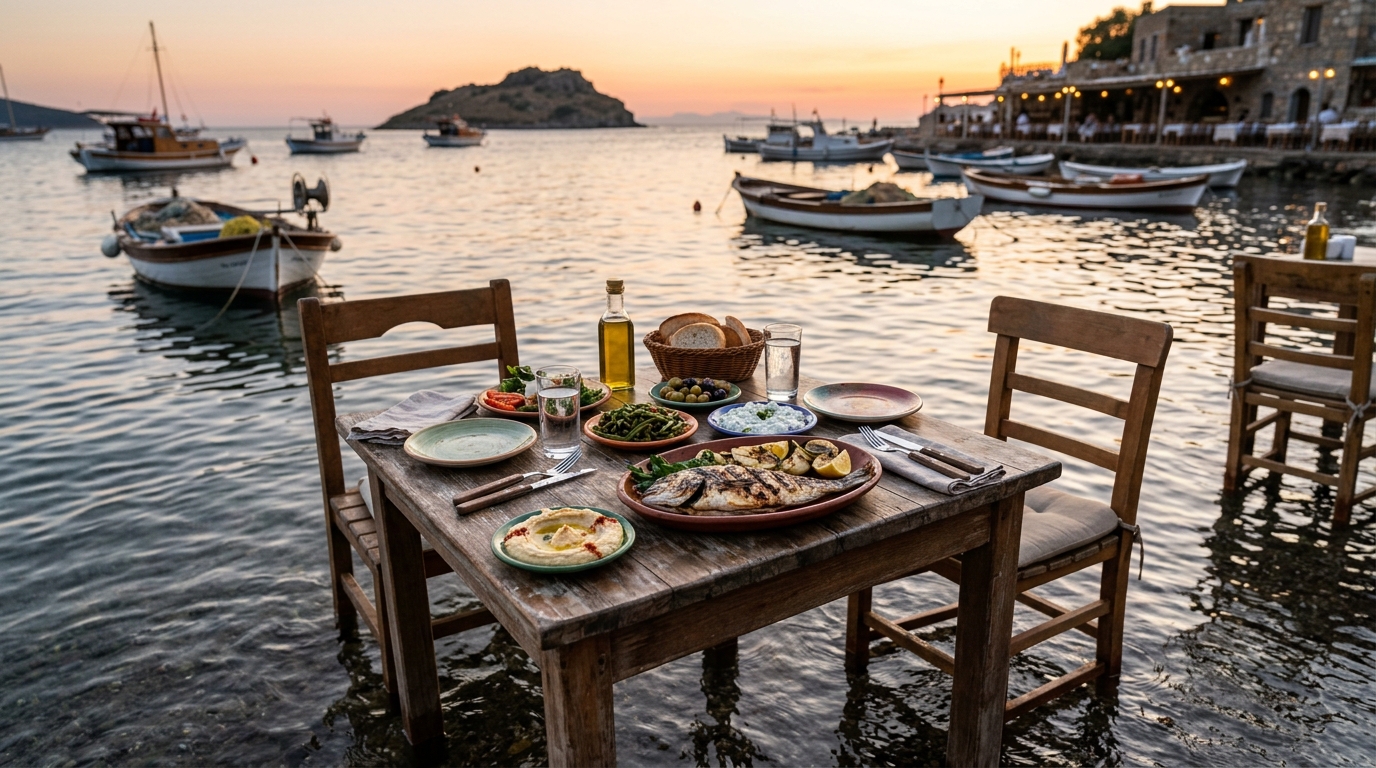
Best Restaurants in Bodrum: A Local's Table Guide
Bodrum's dining scene ranges from plastic-chair fish shacks in fishing villages to Michelin-starred tasting menus twenty minutes away. This guide maps the peninsula's best restaurants by mood and neighborhood, the way locals actually think about eating out.
Read More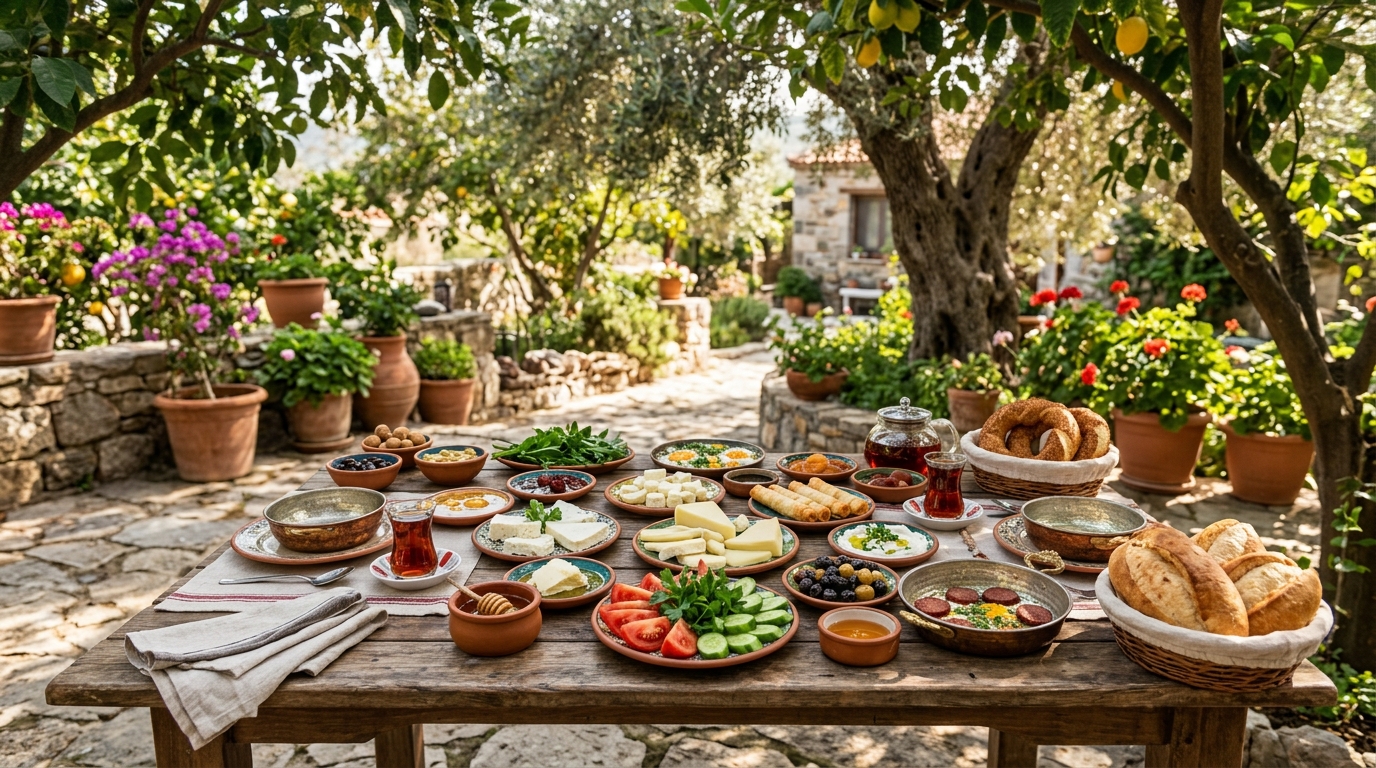
Best Breakfast in Bodrum: A Local's Kahvaltı Guide
Breakfast in Bodrum is a slow, shared ritual rather than a quick meal, with dozens of small plates spread across the table. From orchard gardens in Bitez to village farmhouses inland and marina-side cafés in town, here's a local's guide to the peninsula's best kahvaltı spots.
Read More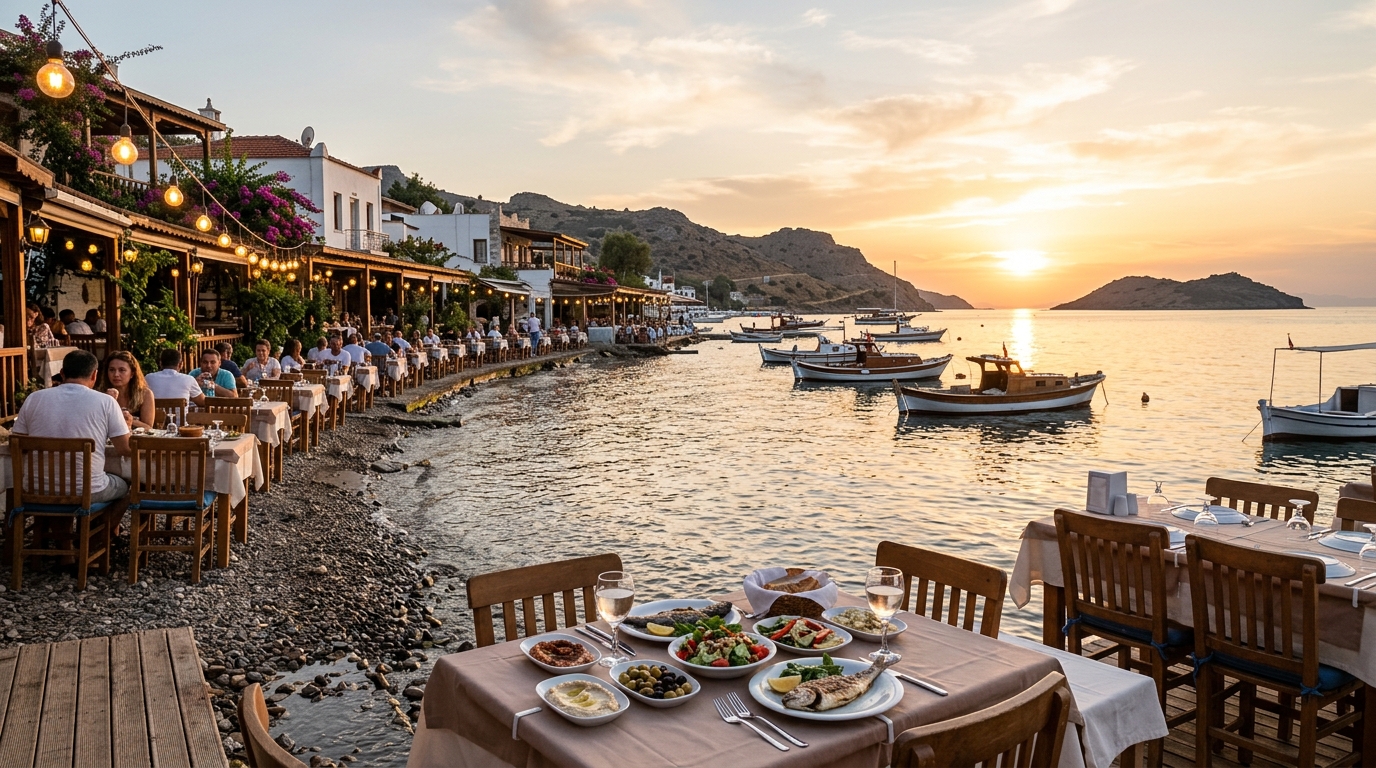
Where to Eat Fish in Gümüşlük: A Local's Guide
Gümüşlük's identity is built around the sea, and its restaurants prove it every evening. Here's a local's guide to the peninsula's favorite fishing village, from waterfront classics to budget-friendly alternatives.
Read More