
Pedasa Ancient City: Exploring Bodrum's Lelegian Past
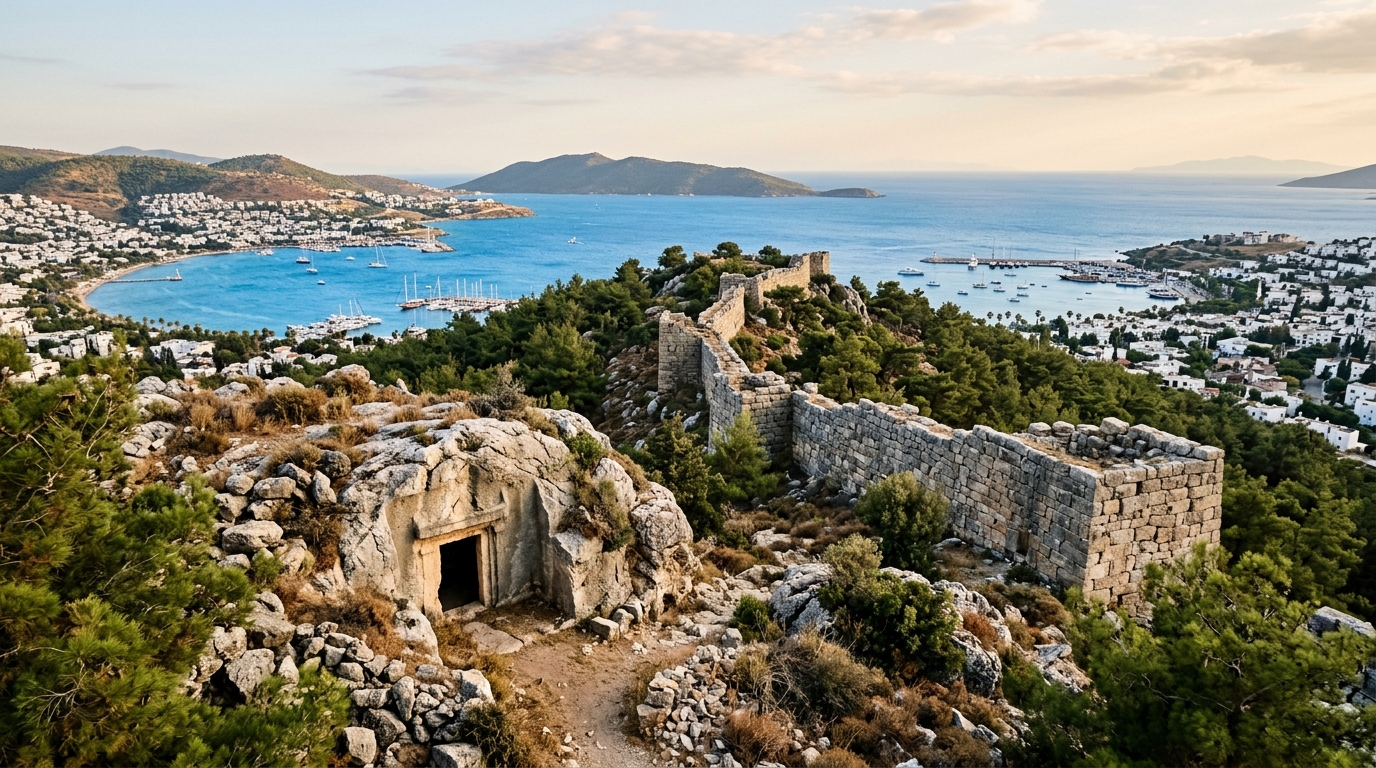
On a pine-covered hill above Konacık, the scattered walls and rock tombs of Pedasa tell the story of the Leleges, the people who lived on this peninsula long before Halicarnassus rose to fame. It's one of the quietest, most rewarding walks near Bodrum town.
Most visitors to Bodrum know the castle, the marina and the ancient theatre, but few realize that a much older city sits on a hillside just a short drive inland. Pedasa was one of the main settlements of the Leleges, an indigenous people who lived on the peninsula before the Carians and Greeks built Halicarnassus below. Today its stone walls, watchtowers and tombs are scattered across a quiet hilltop, reachable by a short hike and rewarded with wide views over Gümbet Bay and the Gökova gulf.
Who Were the Leleges?
The Leleges were an ancient people mentioned by Homer and Herodotus, who lived in this part of Anatolia well before the Carian and Greek colonization of the coast. Herodotus, himself born in Halicarnassus, wrote about the Lelegian cities of the peninsula and their eventual absorption into the growing city below.
Pedasa was one of roughly six Lelegian towns scattered across the hills around modern Bodrum, alongside settlements like Termera and Syangela. These communities lived in fortified hilltop positions, farming the valleys and keeping watch over the coast, at a time long before Mausolus built his famous tomb.
Where Pedasa Sits Today
The ruins lie on a hill above the village of Gökçebel, close to Konacık, only a few kilometers from central Bodrum. The site is unfenced and free to explore, with no ticket booth or visitor center, which is part of its appeal for travelers who like ruins without the crowds.
A marked path climbs from the lower slopes through pine and maquis scrub to the summit, where the old defensive walls come into view. It's a modest walk rather than a serious trek, but sturdy shoes, water and a hat are worth bringing, especially outside the cooler months.
What Survives on the Hill
The most visible remains are stretches of the ancient city wall, built from large, roughly hewn stone blocks in the style typical of Lelegian and early Carian fortifications. Sections of towers and gate foundations can still be traced along the ridge, giving a sense of how the settlement was laid out to control the approach from the coast.
Scattered around the site is a substantial necropolis, with tumulus-style tombs and rock-cut graves cut directly into the hillside. Some tombs still show carved doorframes or chamber openings, a detail that separates Pedasa from many smaller ruin sites on the peninsula where only wall foundations remain.
| Feature | What You'll See |
|---|---|
| City walls | Large stone blocks, tower bases, partial gate remains |
| Necropolis | Tumulus tombs and rock-cut chamber graves on the slopes |
| Setting | Pine-covered hilltop above Gökçebel and Konacık |
| Access | Unfenced, open site reached by a marked walking path |
| Views | Gümbet Bay, the Bodrum peninsula hills, and toward Gökova |
How Pedasa Connects to Halicarnassus
Pedasa's most significant historical moment came in the 4th century BC, when the Carian ruler Mausolus carried out a policy of synoecism, merging several smaller Lelegian towns, including Pedasa, into the growing city of Halicarnassus. Populations were relocated to strengthen the new capital, which Mausolus was transforming into one of the most impressive cities of the eastern Mediterranean.
This move helped make Halicarnassus wealthy and populous enough to support monumental building projects, culminating in the Mausoleum itself, one of the Seven Wonders of the Ancient World. Pedasa, left largely abandoned after the resettlement, survived instead as ruins on its hilltop rather than being built over by later development, which is exactly why so much of it remains visible today.
Visiting Pedasa: Practical Notes
Because the site sits above Konacık, it's an easy addition to a day that also includes Bodrum's town center, the castle, or the beaches around Gümbet and Bitez. Many travelers combine it with a broader look at the peninsula's ancient sites, and local operators listed under Tours & Activities sometimes include Lelegian ruins on history-focused itineraries.
There's no shade at the summit and little signage on site, so going in the morning or late afternoon during the warmer months makes the walk far more comfortable. If you're staying in one of the Bodrum Hotels around Konacık, Bitez or Gümbet, Pedasa is close enough for a half-day outing without needing a full day trip.
Getting to the area is straightforward if you've arranged an Airport Transfer into central Bodrum or Konacık, since a short taxi ride or drive from either covers the rest of the distance to the trailhead.
Frequently Asked Questions
Is there an entrance fee to visit Pedasa?
No, Pedasa is an open, unfenced archaeological site with no ticket booth or admission charge. You simply follow the marked path up the hill on your own schedule.
How long does the walk to Pedasa take?
The climb from the trailhead near Gökçebel to the summit ruins typically takes under an hour at a relaxed pace. It's a moderate uphill walk rather than a technical hike, suitable for most fitness levels with proper shoes.
What should I bring for the visit?
Bring water, sun protection and sturdy walking shoes, since there is no shade or facilities on site. A phone with offline maps downloaded is useful, as signage at the ruins themselves is minimal.
Is Pedasa suitable for children or older visitors?
The uneven terrain and uphill walk make it better suited to visitors comfortable with light hiking rather than very young children or those with mobility concerns. Families with older kids interested in history often find it a rewarding, low-crowd outing.
How does Pedasa relate to the Mausoleum of Halicarnassus?
Pedasa's population was resettled into Halicarnassus under Mausolus in the 4th century BC, part of a broader consolidation that helped fund and populate the city where the famous Mausoleum was later built. Visiting both sites gives a fuller picture of how the region's Lelegian past fed into its Carian golden age.
İlgili Yazılar
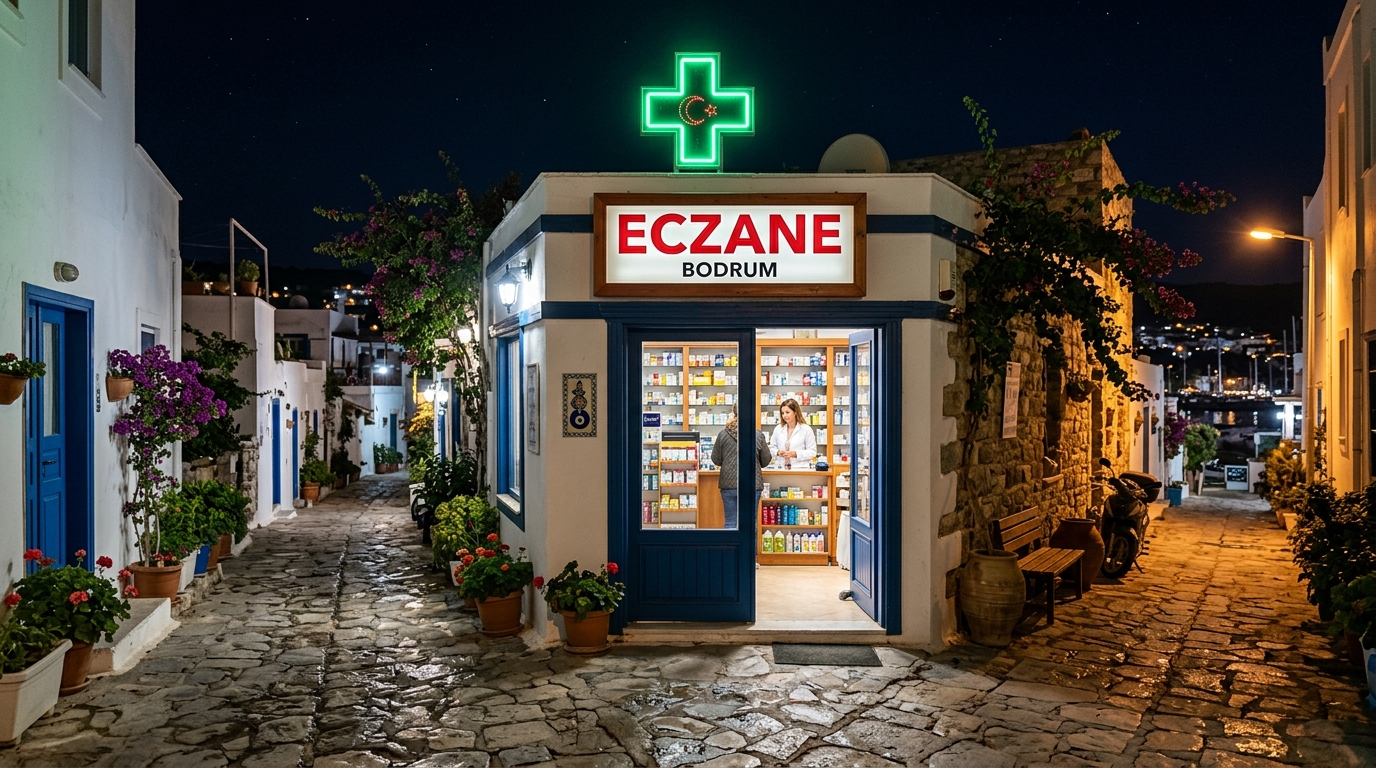
Pharmacies on Duty in Bodrum – Sunday, September 13, 2026
Looking for a pharmacy open late in Bodrum tonight? Here is the complete, verified list of on-duty pharmacies across the peninsula for Sunday, September 13, 2026, straight from the Muğla Chamber of Pharmacists.
Read More
On-Duty Pharmacies in Bodrum Today – September 12, 2026
Need a pharmacy after regular hours in Bodrum tonight? Here is the complete, area-by-area list of on-duty (nöbetçi) pharmacies for September 12, 2026, sourced directly from the Muğla Chamber of Pharmacists.
Read More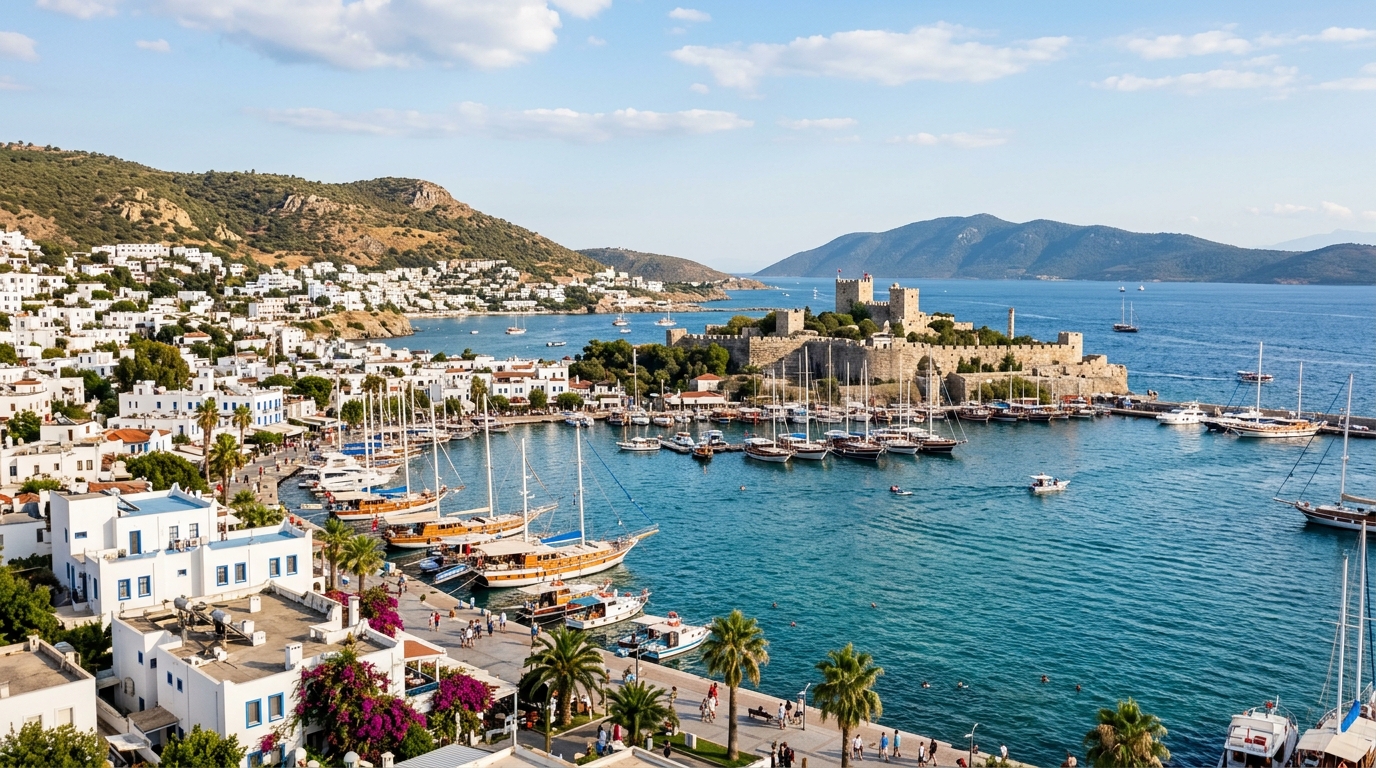
Pharmacies on Duty in Bodrum Today – September 10, 2026
Looking for a pharmacy open late in Bodrum tonight? Here is the official on-duty (nöbetçi) pharmacy list for September 10, 2026, covering every corner of the peninsula from the town center to Yalikavak and Gundogan.
Read More